

The most expensive online shop admin mistakes aren’t typos in prices — they’re orders that never got recorded, never got followed up, and never got reviewed. The seven below show up almost every time a shop’s volume starts climbing: chats answered by mood instead of priority, records postponed, confirmations asked from scratch, one number shared by several people, unpaid orders left hanging, customer data dying inside a chat thread, and no recap. Each has a practical fix you can start today — several for free, without switching apps.
Being busy is the goal most shops fight for. The problem: a system that holds 20 orders a day often breaks at 60 — and the ones who pay for it are customers who quietly disappear, not the complaints you hear about.
Signs your orders are growing faster than your systems
Before the list, a quick check — the more of these feel familiar, the more urgent the fixes:
- Buyer chats you only remember (or only read) days later
- Customers re-sending order details because your admin can’t find the thread
- Two admins replying different things to the same person
- Physical stock never matches the records
- Revenue feels up, but both cash and goods are unclear
This isn’t a laziness problem. It’s a system that didn’t scale with your volume. One by one:
Mistake #1: Answering chats by mood, not priority
Symptom: the chats answered first are the newest or the politest — not the most urgent. The buyer who transferred money at 9am and waits for confirmation loses the queue to someone who asked “is this available?” and vanished.
The cost: orders lost without a sound. No complaints, no bad reviews — just buyers moving to the next shop because they felt ignored. You only ever count the ones who bothered to tell you.
 Illustration: three chats in, zero certainty — everything looks equally urgent, so nothing is actually managed.
The fix: build a visible queue before chats become replies. At minimum: one list (a spreadsheet works) tracking who awaits confirmation, who awaits payment, who awaits shipping. The 3-step system in how to record WhatsApp orders closes exactly this leak.
Mistake #2: “I’ll log it later”
Symptom: orders taken verbally, records promised “after this shipment”. Later never comes.
The cost: two layers. First, details remembered wrong — quantity, color, address; small per order, a warehouse of complaints per year. Second, orders never recorded at all, which means they were also never billed properly.
The fix: one chat, one record — the row is created the moment the deal closes, not later. If logging feels heavy (open spreadsheet, retype names, calculate totals), the fix isn’t more discipline: it’s removing the typing. Let the system record; let humans decide.
Mistake #3: Confirming orders by asking everything from scratch
Symptom: every order confirmed with random questions — “which item again?”, “your address?”, “which transfer?” — repeated per buyer, per day.
The cost: waste in both directions. Admins lose time on the same question over and over; buyers lose patience with a shop that feels disorganized. And the answers never come back in a consistent shape — impossible to cross-check when something goes wrong.
The fix: one standard format, sent with a single keystroke. We made the copy-paste kit in online shop order format templates — confirmation messages built so buyers return the same fields every time.
Mistake #4: One WhatsApp number shared by several admins
Symptom: the shop number is logged in on multiple devices — sometimes the owner, sometimes admin A, sometimes admin B. Everyone sees the same chats, nobody knows who’s handling what.
The cost: duplicate orders (two admins processing the same request), contradicting answers, and the worst part: nobody accountable when it goes wrong. Chat history also gets tangled with whichever admin’s personal messages live on that device.
The fix: separate the channel from the person. All communication lands in one channel, but every human has their own account with clear permissions — who can change prices, who can process orders, who only reads. In Vio this is the Members page: add admins as members with their own roles, every change attributed.
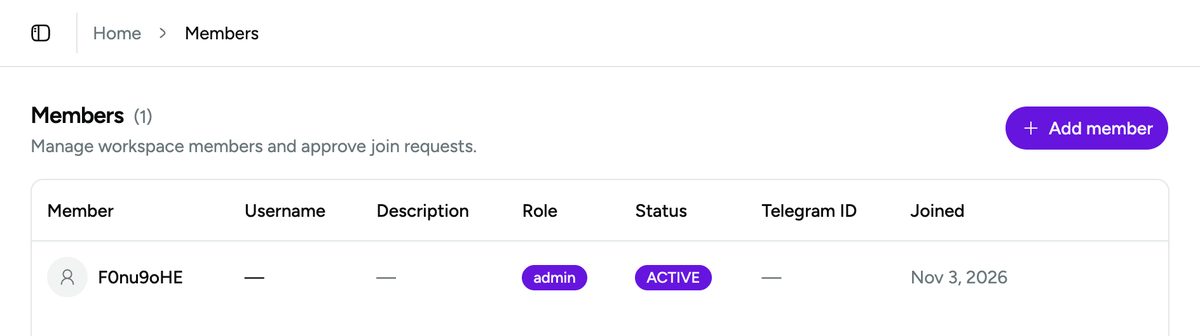 One channel, many people, separate accountability: admin roles tracked per member, not per whoever holds the phone.
Mistake #5: Never chasing unpaid or pending orders
Symptom: COD orders undelivered-paid, transfers unconfirmed — everything left hanging until the buyer forgets or the goods ship anyway.
The cost: the quietest revenue leak there is. Goods move, money doesn’t. Or more often: orders silently cancel, stock gets stuck, and margin dies on items that never reached a serious buyer.
The fix: make the waiting list a default view, not a search result. A filter for unpaid/pending status should be one click, with written rules for when to chase (e.g., day +1 and day +3). Chased ones proceed; silent ones cancel before they get expensive.
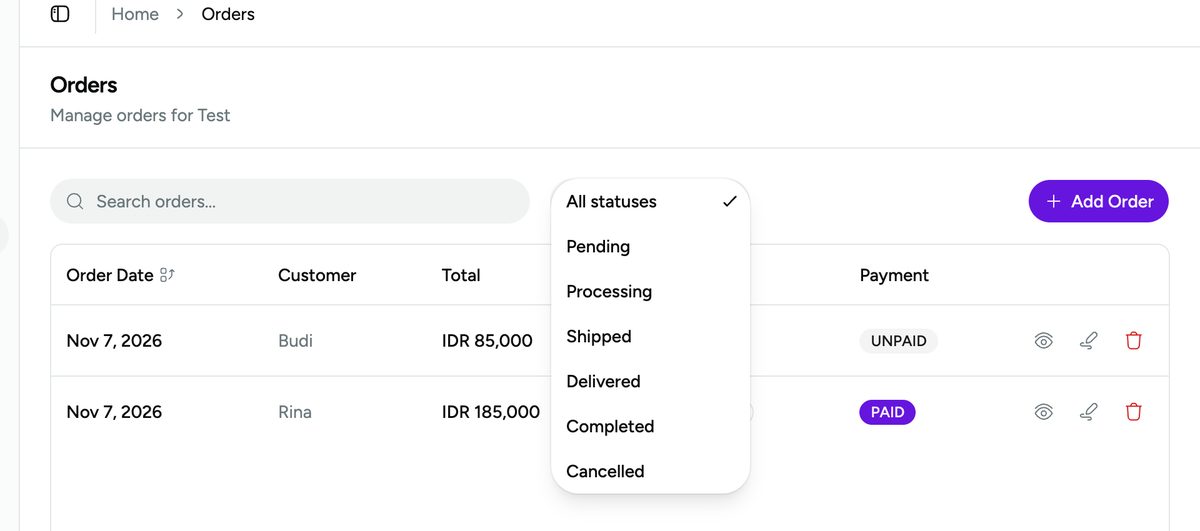 An order list with payment status per order + a one-click status filter: unpaid and pending surface instantly, not after the buyer nags you.
Mistake #6: Letting customer data die with the chat
Symptom: a buyer’s history exists only inside their thread. When a returning customer asks “what did I buy last time?”, the admin scrolls manually or gives up.
The cost: your most valuable customers — the ones who already paid — get treated like strangers. No sensible upsells, slow complaint handling, and when an admin quits, their customers’ history quits with them.
The fix: store customers as data, not as threads. Name, contact, and order history kept permanently and searchable — returning buyers greeted with records, not guesses.
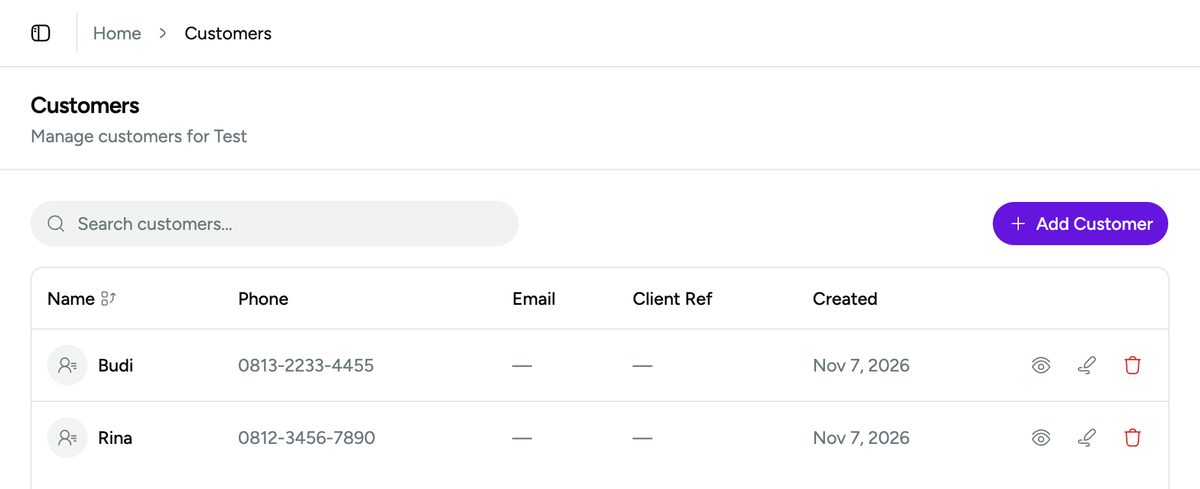 Customers as a database: searchable by name, contacts saved, history that survives beyond the chat.
Mistake #7: Never recapping — so never knowing
Symptom: the shop runs on vibes. “Feels busy lately” is the best monthly report available.
The cost: business decisions made on random data. Which products actually sell, when orders peak, which admin needs help — all answered with “I think”. And when any of the leaks above (#1–#6) runs, it’s never measured, so it’s never fixed.
The fix: a 15-minute ritual. Daily: orders in vs. orders recorded. Weekly: sales recap, top products, pending orders. The pattern is taught in how to record WhatsApp orders; what you need first is a tidy source of truth.
Summary: seven mistakes, seven fixes
| # | Mistake | Main cost | Fix |
|---|---|---|---|
| 1 | Chats answered by mood | Orders lost silently | A visible queue |
| 2 | Logging postponed | Wrong details, unbilled orders | One chat, one record |
| 3 | Confirming from scratch | Time wasted, buyers annoyed | Standard template — see the kit |
| 4 | One number, many people | Duplicates, zero accountability | Separate channel from person + roles |
| 5 | Never chasing pending | Goods move, money doesn’t | Unpaid filter as a default view |
| 6 | Customer data in chats | Regulars treated as strangers | Store customers as data |
| 7 | No recaps | Decisions by feeling | Daily + weekly 15-minute ritual |
Frequently asked questions
Which admin mistake should I fix first?
The ones closest to cash: unpaid orders never chased (#5) and records always postponed (#2). Both pay for themselves within the week. The rest can follow in stages.
How many admins does one online shop need?
There’s no magic number — what matters is the system, not headcount. One admin with a clean flow (order list, confirmation template, payment statuses) beats three admins fighting over one WhatsApp number. Add people only after mistakes #1–#7 are under control, so new hires don’t inherit the chaos.
Is this a system problem or an admin problem?
Usually neither is to blame. A system that holds 20 orders a day genuinely breaks at 60 — that’s capacity, not character. The fix is structural: rules, templates, and a tool that records, rather than admins who simply try harder at typing.
When fixing the system feels heavier than running the shop
None of the seven fixes above requires you to become a management expert. But they do require time to build — and time is exactly what a busy shop doesn’t have.
Vio was designed for this case: incoming chats are logged as complete orders with payment status, customers are stored as searchable data, admins get their own roles in one workspace, and the recap is just open and read. It doesn’t replace your WhatsApp — it cleans up everything leaking around it.
Try Vio free — patch these seven leaks one at a time, starting with the most expensive.


0 Comments
Join the conversation